What are the differences between high-frequency welded bellows-type protective covers and ordinary protective covers
Author:ProPureX, Update:2025-07-16 06:45:46
High-frequency welded bellows-type protective covers and regular protective covers exhibit significant differences in manufacturing processes, structural performance, material selection, and application scenarios. The detailed comparisons are as follows:
I. Manufacturing Process
-
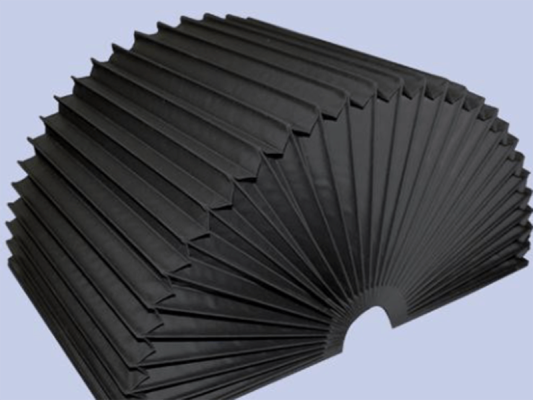
High-Frequency Welded Bellows-Type Protective Cover
- Utilizes high-frequency welding technology to bond outer PVC/TPU-coated fabric with an inner PVC skeleton.
- Advantages:
- High welding efficiency and speed.
- No additional adhesives required.
- Maintenance-free after welding.
- Features waterproof, dustproof, oil-resistant, acid-resistant properties.
-
Regular Protective Cover
- Employs traditional manufacturing methods, such as stitching or adhesive bonding.
- Drawbacks:
- Stitching may result in exposed threads or weak seams prone to breaking.
- Adhesives may degrade over time, reducing protective performance.
II. Structural Performance
-
High-Frequency Welded Bellows-Type Protective Cover
- Long stroke, small compression ratio: Minimum compression ratio of 1:10, adaptable to导轨 of varying lengths while saving space.
- Superior sealing: Effectively blocks dust, metal chips, and debris from entering machinery.
- Durability: Resistant to foot impact, deformation, and shock, ensuring long service life.
-
Regular Protective Cover
- Limited stroke and compression ratio: May fail to meet requirements for specialized equipment.
- Poor sealing: Gaps allow contaminants to infiltrate, risking equipment damage.
- Low impact resistance: Prone to deformation or damage under external force.
III. Material Selection
-
High-Frequency Welded Bellows-Type Protective Cover
- Materials include PVC, nylon, rubber, etc., chosen based on specific environments.
- Properties: Resistant to coolants, oils, acids, and alkalis.
-
Regular Protective Cover
- Limited material options, often unsuitable for harsh conditions (e.g., high temperature, humidity, or corrosive environments).
IV. Application Scenarios
-
High-Frequency Welded Bellows-Type Protective Cover
- Ideal for high-demand environments:
- CNC machine tools
- Machining centers
- Automated equipment
- Ensures extended equipment lifespan by shielding against environmental hazards.
-
Regular Protective Cover
- Suitable for low-demand scenarios:
- Simple mechanical equipment
- Hand tools
- Provides basic protection only.

.jpg)
.jpg)