
PVC/PU Bellows Cover Welding Machine
.jpg)
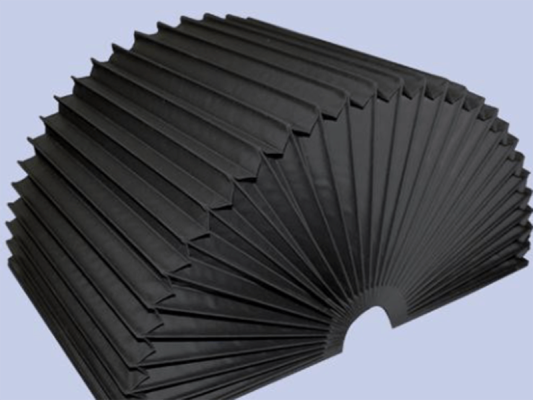
High-frequency welded accordion-style protective covers and ordinary protective covers differ significantly in manufacturing processes, structural performance, material selection, and application scenarios. The following is a detailed introduction:
I. Manufacturing Process
1. High-Frequency Welded Accordion-Style Protective Cover: Utilizes high-frequency welding technology to weld the outer PVC TPU coated fabric and inner PVC frame together. This method boasts high welding efficiency and speed, requires no auxiliary adhesives, and requires no maintenance after welding. It also offers advantages such as waterproofing, dustproofing, oil resistance, and acid resistance.
2. Ordinary Protective Cover: The manufacturing process is relatively traditional, potentially involving sewing or bonding. Sewing may result in exposed thread ends and easy thread breakage; bonding may lead to a decrease in protective performance due to adhesive aging and detachment.
II. Structural Performance
1. High-Frequency Welded Accordion-Style Protective Cover
Long Stroke, Low Compression: The minimum compression ratio can reach 1:10, adapting to guide rails of varying lengths and saving installation space.
Good Sealing: Effectively prevents dust, metal shavings, and other debris from entering the machine tool, protecting critical components.
**1. **Impact-Resistant and Foot-Resistant:** Unaffected by foot traffic and impacts from hard objects, it will not deform and has a long service life.
2. **Ordinary Protective Covers:**
**Limited Stroke and Compression Ratio:** Some ordinary protective covers have limited stroke and compression ratio, which may not meet the needs of certain specialized equipment.
**Poor Sealing:** Gaps may exist, allowing dust and debris to enter the equipment and affect its normal operation.
**Weak Impact Resistance:** Prone to deformation and damage when subjected to external impacts.
III. Material Selection
1. **High-Frequency Welded Bellows-Type Protective Covers:** Available in various materials to suit different usage environments and needs. Commonly used materials include PVC, nylon, and rubber, offering resistance to coolants, oil, acids, and alkalis.
2. **Ordinary Protective Covers:** Material selection is relatively limited and may not meet the requirements of some special environments. For example, in high-temperature, humid, or highly corrosive environments, the materials of ordinary protective covers may not provide sufficient protection.
IV. Application Scenarios
1. High-Frequency Welding Bellows-Type Protective Cover: Suitable for applications requiring high protection performance, such as CNC machine tools, machining centers, and automated equipment. It effectively protects equipment from external environmental damage and extends its service life.
2. Ordinary Protective Cover: Suitable for applications with lower protection requirements, such as simple mechanical equipment and hand tools. It primarily provides basic protection.
© 2012‐2022 SHANGHAI PUXIONG, Inc. All rights reserved. ProPureX™
.jpg)
.jpg)